







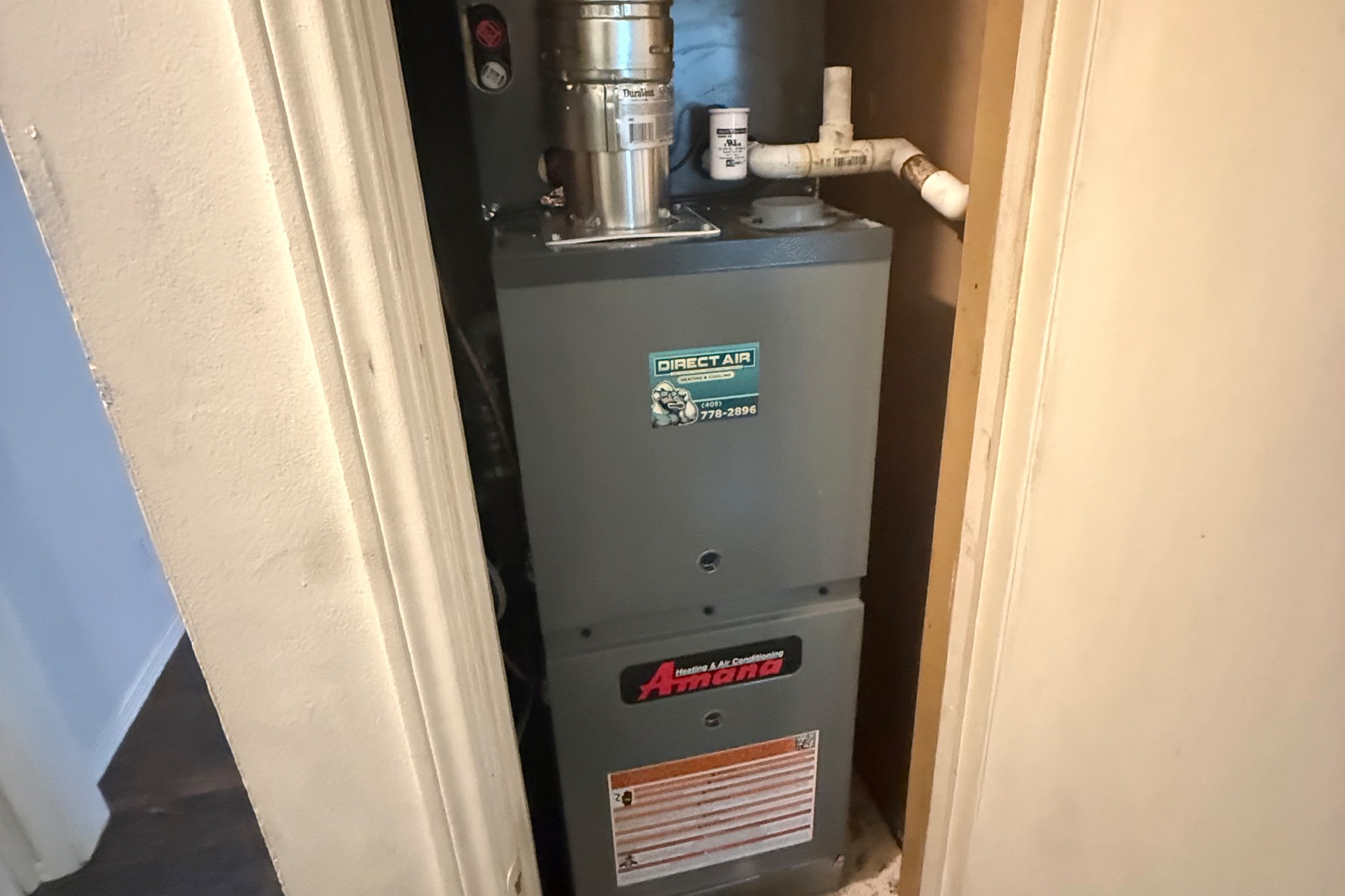
Should You Replace Your AC and Furnace at the Same Time?
At some point one half of your system fails, and you get asked a question you weren't expecting: while we're here, do you want to replace the other half too? It's a fair question that sounds exactly like an upsell, and sometimes it is one. Other times it's genuinely the cheaper path.
Here's how to tell which situation you're in, without having to take anyone's word for it.
Why they're more connected than they look
Most homes have a split system: an outdoor unit for cooling and an indoor furnace or air handler for heating. They feel like two separate machines, but they share the parts that actually move air. The blower that pushes heat through your house in January is the same blower pushing cold air in July. The indoor evaporator coil usually sits directly on top of the furnace. They share ductwork, a thermostat, and a filter.
That shared hardware is the reason "replace both" is sometimes a real recommendation rather than a sales tactic.
When replacing both makes sense
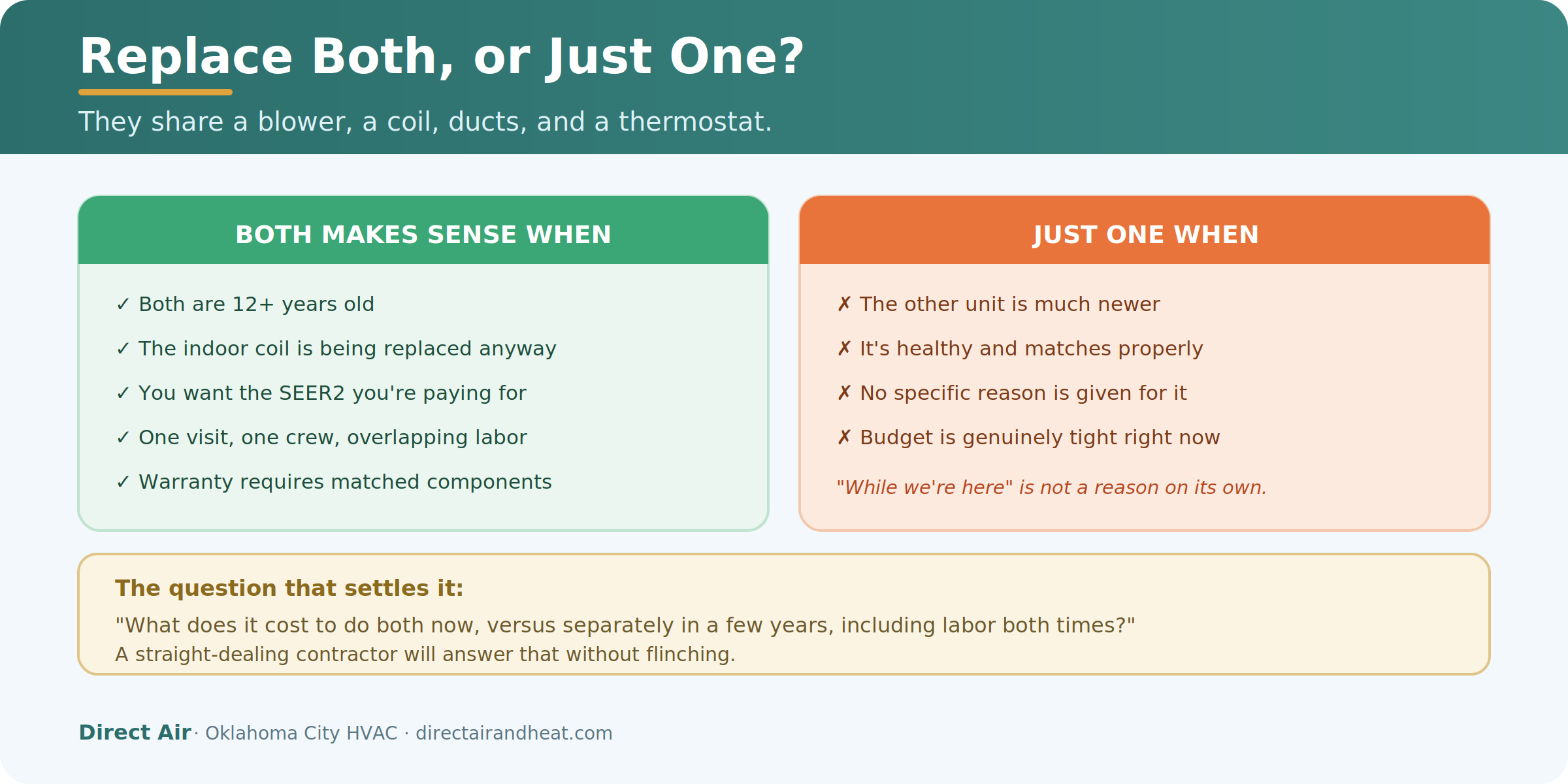
- Both units are old. If they were installed together and are both in the 12-to-17-year range, replacing one means you'll very likely be back for the other within a couple of years, paying a second round of labor and a second disruption.
- You're moving to a new refrigerant anyway. New systems use R-454B rather than R-410A, and the outdoor unit and indoor coil have to be a matched set. If the coil is being replaced regardless, the economics shift.
- Efficiency ratings depend on the pair. A high-SEER2 outdoor unit paired with an old indoor coil generally won't deliver its rated efficiency. You paid for a number you won't get.
- Labor overlaps. One visit, one crew, one setup. Doing both later means paying separately for work that partly overlaps.
- Warranty and matching. Manufacturers often require matched components for full coverage, and a mismatched pairing can complicate claims.
- You're switching system types. Moving to a heat pump, for example, is a whole-system decision by nature.
When it doesn't
Be equally clear about this, because "while we're here" is not a reason on its own:
- One unit is genuinely much newer. If your furnace is six years old and running fine, replacing it because the AC died is throwing away years of life you already paid for.
- The newer unit is well matched and healthy. If it pairs correctly with the new equipment and has no issues, leave it alone.
- The recommendation comes with no explanation. If a contractor can't tell you specifically why your indoor unit needs replacing, in terms of age, condition, matching, or efficiency, that's your answer.
- Budget is genuinely tight. Replacing one now and the other later is a legitimate choice. It costs more in total over time, but "more later" beats "can't afford it now."
The questions to ask
Rather than deciding on instinct, ask the contractor:
- How old is each unit, and what's the condition of the one you're proposing to keep?
- Will the new outdoor unit be properly matched to my existing indoor coil?
- What SEER2 will I actually get with the mixed setup versus a full replacement?
- Does keeping the old indoor unit affect the warranty on the new equipment?
- What would it cost to do both now versus separately in a few years, including labor both times?
That last question is the one that usually settles it, and it's also the one a straight-dealing contractor will answer without flinching.
The fall timing advantage
There's a practical reason this question comes up more in fall, and a reason it's a good time to act on it. Right now neither system is under peak load, so you can be without cooling or heat for a day without it being a crisis. Schedules are more open than they are in July or January. And you have time to compare quotes properly rather than deciding under pressure with the house at 95 degrees.
If you've been putting off a decision you know is coming, this shoulder season is the least painful window in the whole year to make it.
Direct Air is a family-owned Oklahoma City HVAC company. If one half of your system is failing, we'll tell you honestly whether the other half needs to go with it, including when the answer is no. Learn more about AC replacement in Oklahoma City, or call us.
HVAC Replacement Across the OKC Metro
Direct Air replaces cooling and heating systems for homeowners in Mustang, Yukon, Oklahoma City, and throughout the area: Edmond, Norman, Moore, Midwest City, Del City, Choctaw, Nichols Hills, Newcastle, Purcell, El Reno, and Weatherford, OK.
Frequently asked questions
Should I replace my AC and furnace at the same time? It depends mainly on their ages and how well they'd match. If both are 12 or more years old, or the indoor coil has to be replaced anyway, doing both at once usually saves money and a second disruption. If one is much newer and healthy, replacing it is wasteful.
Why do contractors recommend replacing both units together? Because they share the blower, the indoor coil, the ductwork, and the thermostat, and because efficiency ratings and warranties often depend on matched components. That said, ask for the specific reason in your case rather than accepting it as a rule.
Can I put a new AC with an old furnace? Often yes, but check the matching. A new outdoor unit with an old indoor coil frequently won't deliver its rated SEER2 efficiency and may affect warranty coverage. Ask what efficiency you'd actually get with the mixed setup.
Is it cheaper to replace both at once? In total, usually yes, because you pay once for overlapping labor and one installation visit instead of two. But the upfront cost is higher, so replacing one now and one later remains a legitimate choice if budget is the constraint.
When is the best time to replace HVAC equipment? The shoulder seasons, spring and fall, are easiest. Neither system is under peak load, schedules are more open, and you can compare quotes without deciding under pressure during extreme weather.

Financing & Monthly Payment Plans
.png)